The Flux Trainee Committee is excited to spotlight the exciting research of promising trainees. Each blog post will feature a brief interview with our 2026 FLUX travel award recipients. In this post, we caught up with Eugenia Giampetruzzi to discuss their work recently presented at FLUX.
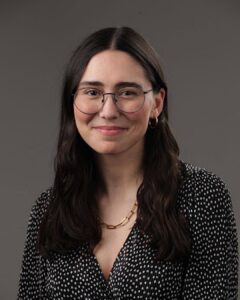 Eugenia Giampetruzzi
PhD Student
Stanford University
Stanford Neurodevelopment Affect and Psychopathology Laboratory
Fun fact: Outside of the lab, I'm a licensed personal trainer & group strength-training coach!
What is the focus of your research?
My research uses naturalistic data (medical records, wearable devices, experience sampling) and neuroimaging to study the associations between psychiatric illness (primarily depression) and cardiometabolic disease.
What is your main research interest(s)?
Broadly, I study how mental and physical health are intertwined across development. Specifically, I'm interested in the coupling between neurodevelopment, psychiatric illness (primarily depression), and cardiometabolic disease in childhood and adolescence. I am especially interested in the developmental mechanisms that link these disorders, that is, why psychiatric and cardiometabolic illness so often co-occur in youth. One particular question I'm working on is how chronic stress and early-life adversity impact inflammatory signaling and stress-hormone systems in ways that shape both cardiometabolic function and the developing brain during puberty. In another project, I plan to
extend this question to pregnancy and infancy, testing how maternal cardiometabolic conditions shape early brain development, including myelination, and the developing autonomic nervous system. To study these questions, I use naturalistic data including electronic health records, wearable devices, and experience sampling, alongside biological assays from blood (adiposity, lipids, glycemia, and inflammatory markers) and multi-modal neuroimaging methods such as structural and functional MRI.
What has been the most meaningful or formative experience in your training so far?
The most formative experience in my training was in the Treatment Resistant Depression Program at Emory, where I worked directly with adults with severe depression, many of whom also lived with chronic physical health conditions. My first independent projects examined how their early-life experiences, decades before they presented to our clinic, shaped both the course of their depression and their comorbidities. This led me to pursue post-baccalaureate training in adolescent depression and developmental neuroimaging at the NIMH.
What do you see as the broader impact of your work?
Mental illness and cardiovascular disease (CVD) are both leading contributors to the global burden of disease; perhaps not surprisingly, there is a well-documented association between the two. Across the lifespan, mental illness is a robust and independent predictor of subsequent CVD, and this association may be detectable well before CVD itself appears. Mental illness emerges early, with roughly 50% of all lifetime cases beginning by age 14 (Solmi et al., 2022); cardiovascular events, in contrast, are rare until later adulthood. What emerges far earlier is cardiometabolic disease, a cluster of interrelated, often preventable conditions, including obesity, insulin resistance, hypertension, and dyslipidemia, detectable in youth from risk factors such as adiposity, blood pressure, lipids, and glycemia. How this risk interacts with neurodevelopment and mental illness in young people remains unclear, a question with significant implications for early prevention and intervention.
What is one key project, finding, or achievement you are most proud of?
I'm most proud of my recent preprint where I used three waves of Fitbit data from roughly 8,300 adolescents in the ABCD Study to characterize how the daily cardiac rhythm develops across adolescence. We found that individual differences in that developing rhythm forecast the first onset of both psychiatric and cardiometabolic illness.
How have mentorship, collaboration, or community shaped your development as a scientist?
Everything I have worked on and published has been collaborative, across institutions and many disciplines. Since most of my work is multimodal, integrating physiological, neural, clinical, and population-level data, I've been fortunate to have mentors with expertise spanning clinical psychology and psychiatry, developmental neuroscience, immunology and metabolic health, and epidemiology. I've also found the computational and data science community at Stanford especially valuable. The many courses and seminars in machine learning, biomedical data science, and open science on campus have given me the methods training to actually integrate these different kinds of data.