
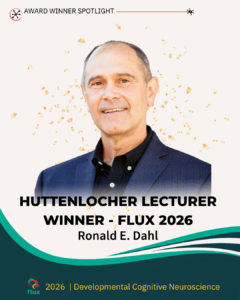
The Flux Society is pleased to recognize Ronald E. Dahl as the recipient of the Flux Society 2026 Huttenlocher Award.
Dr. Dahl is a pediatrician, developmental scientist, and professor of Public Health at UC Berkeley. His work has made transformative contributions in the field of developmental cognitive neuroscience. Across more than three decades, his research has advanced our understanding of child and adolescent development, behavioral and emotional health in youth, adolescent brain development, as well as the clinical, public health, and policy implications of developmental science.
The Huttenlocher Award recognizes researchers whose scientific contributions have shaped the field from its inception and inspire future generations of developmental cognitive neuroscientists. In this spotlight, Dr. Dahl reflects on the power of interdisciplinarity in his own work, the early questions that drew him to sleep and the developing brain and ultimately shaped his path, and the excitement of helping bring together a growing field, and the people and perspectives that have helped shape his career.
Interdisciplinary Science as a Foundation
For Dr. Dahl, one of the throughlines of his career has been the interdisciplinarity that has followed him through each step of his journey. His work has brought together clinical, developmental, and basic science alongside evolutionary perspectives to ask broader questions about brain, behavior, learning, and health.
When asked about something unexpected that contributed to his success, Dr. Dahl says:
“Interdisciplinarity. Not only having strong clinical, developmental, and basic science interests, but also having a deep interest in evolutionary perspective on brain, behavior, and learning.”
How Curiosity About Sleep Opened a Field of Questions
When asked “What first sparked your interest in this field?” Dr. Dahl reflects: “Being intrigued by the function of sleep in the learning and developing brain.”
Dr. Dahl’s early interest in developmental cognitive neuroscience began with questions that focused on sleep and the developing brain. The curiosity that underlined these questions has remained connected to larger questions now around learning, plasticity, motivation, and development.
When asked about a favorite developmental cognitive neuroscience finding, Dr. Dahl pointed to causal evidence for the role of sleep in learning and development. He referenced:
“Causal evidence for the direct role of sleep in learning and development: Wilhelm, Kurth, Ringli, Mouthon, Buchmann, Geiger, Jenni & Huber (2014), Sleep slow-wave activity reveals developmental changes in experience-dependent plasticity, J Neurosci, 34(37), 12568–12575 — a learning manipulation showing local, experience-dependent slow wave activity increases in children”
In a slightly different vein, when Dr. Dahl was asked about a paper that had a major impact on him, he mentioned:
“Craig (2009). How do you feel — now? The anterior insula and human awareness. Nature Reviews Neuroscience, 10(1), 59–70. (Updated by this: Molnar-Szakacs & Uddin (2022), Anterior insula as a gatekeeper of executive control, Neurosci Biobehav Rev,)”
Helping Shape the Study of Adolescent Brain Development
When reflecting on what he is most proud of in his career, Dr. Dahl says: “Organizing the first interdisciplinary meeting (NYAS) on adolescent brain development in 2003...it was such a fun and exciting time in the field and brought together an amazing group of people.”
The first interdisciplinary New York Academy of Sciences meeting on adolescent brain development stands out as a proud and energizing career moment. For those interested in adolescent brain development, Dr. Dahl’s 2004 keynote address from this meeting is one of the most essential and well-cited papers on this topic (https://doi.org/10.1196/annals.1308.001).
Rethinking Motivation and Feelings in Adolescent Development
Another theme in Dr. Dahl’s reflection is the importance of feelings, embodied sensations, and interoceptive processes. His responses highlight the ways that motivation, learning, and development are shaped not only by cognition, but also by regulatory and bodily systems that can sometimes go underappreciated in developmental cognitive neuroscience.
Something that really surprised Dr. Dahl to learn was:
“The crucial importance of feelings (embodied sensations and interoceptive processes) in motivation, learning and development.”
“What is something about our field that you think is underrated, underappreciated, or lesser known?”
Dr. Dahl notes:
“The role of the hypothalamus (and its rich interconnections with almost all regulatory systems) and its capacity to influence motivation, behavior, and learning.”
Challenging Common Myths about Adolescent Brain Development
Dr. Dahl’s work has also helped challenge overly simple explanations of adolescent behavior and decision making. When asked about his least favorite myth about brain development, he pointed to a common misconception:
“That a weak/immature PFC explains adolescent risk taking and immature decision making.”
The People Who Shaped the Path
When reflecting on those who made a difference in his career, Dr. Dahl emphasized just how many mentors, collaborators, colleagues, and teams have shaped his work. His answer reflects the deeply collaborative and community based nature of developmental science.
When asked who made a difference in his career path, Dr. Dahl says: “OMG There are SO many. (The hardest question of all; How to pick even a small number from the multitudes)
Eveline Crone is at the very top of the list.
And Linda Wilbrecht, Andrew Fuligni, Adriana Galvan, Nick Allen, Jenn Pfeifer, and the entire team of the Center for the Developing Adolescent [at UCLA: https://developingadolescent.ucla.edu/] have all had an enormously important impact.
A few standouts: Myron Hofer, Danny Pine, Irv Zucker
Our core group in Pittsburgh: (especially Cecile Ladouceur, Erika Forbes, Jen Silk, and Dana McMakin)
Also, Chuck Nelson, Nim Tottenham, Ann Masten; Ann Kelley, Carol Worthman”
Advice Across a Career
After decades of field shaping work, Dr. Dahl’s advice to his younger self is brief, generous, and very grounded. He says the advice he would give to his younger self is:
“Worry less… be more patient…”
Congratulations
Please join us in congratulating Dr. Ronald E. Dahl, recipient of the Flux 2026 Society Huttenlocher Lecturer Award. We are honored to recognize his transformative contributions to developmental cognitive neuroscience and look forward to his presentation at the 2026 Flux Congress.
Read more about the Flux Society award winners on our LinkedIn page.
Learn more about the Flux 2026 Conference.
About the Authors
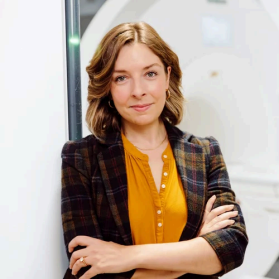 Giorgia Picci - Lab Director, Cognitive Affective Neurodevelopment in Youth Lab; Institute for Human Neuroscience at Boys Town National Research Hospital
Giorgia Picci, PhD, is the Susan & George Haddix Endowed Chair in Developmental Neuroscience and Director of the Cognitive Affective Neurodevelopment in Youth Laboratory (CANDY Lab) in the Institute for Human Neuroscience at Boys Town National Research Hospital. Dr. Picci is a developmental neuroscientist interested in how early life experiences shape neurodevelopment and mental health outcomes. Her research currently focuses on understanding how the confluence of childhood trauma and pubertal development influence adolescents’ neural structure and function and risk for psychopathology. She uses multiple levels of biology, including hormones, s/fMRI as well as MEG to answer her research questions.
Connect with Dr. Picci on LinkedIn.
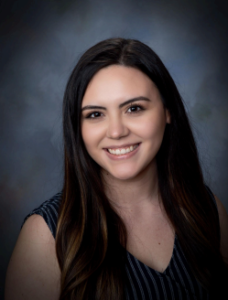 Mia Jimenez - PhD student Stanford University; Developmental and Behavioral Sciences Program
Mia Jimenez is a PhD student in the Developmental and Psychological Sciences program at the Stanford Graduate School of Education. Her research background sits at the intersection of psychology, education, criminology, and neuroscience, with a focus on how children's environments shape learning, developmental trajectories, and brain development. She is especially interested in protective factors that support academic resilience among students from underrepresented backgrounds. As a first generation college graduate and QuestBridge Scholar, Mia is passionate about using research to challenge deficit based narratives about adversity and to better understand the strengths, adaptations, and protective factors that help students thrive.